

.png)
The catastrophic flood in Nepal and Tibet is a devastating reminder that disasters rarely occur in isolation.
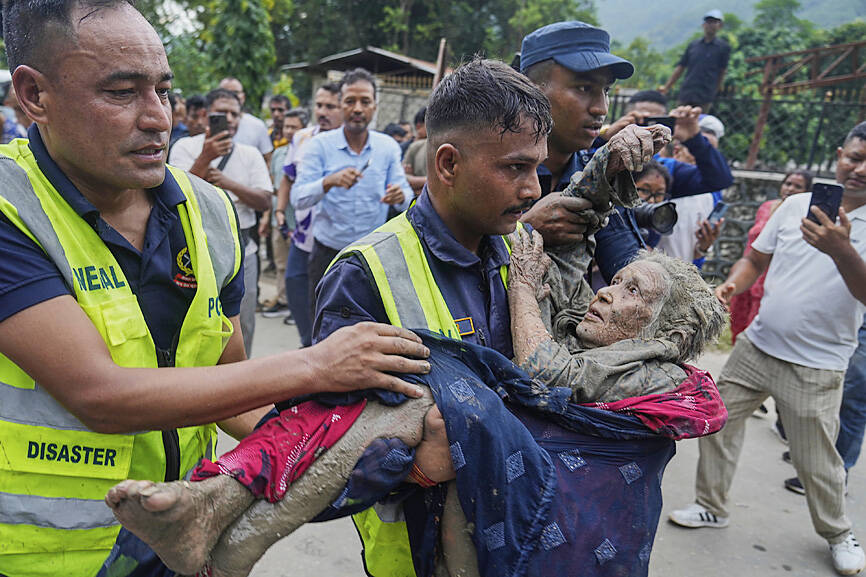
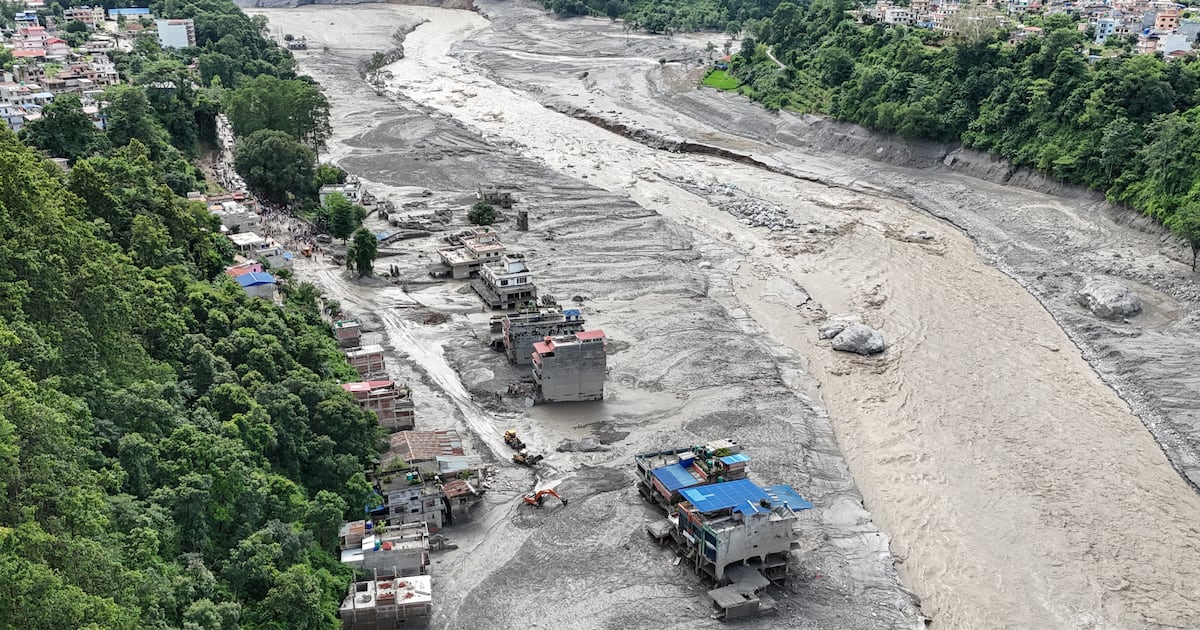
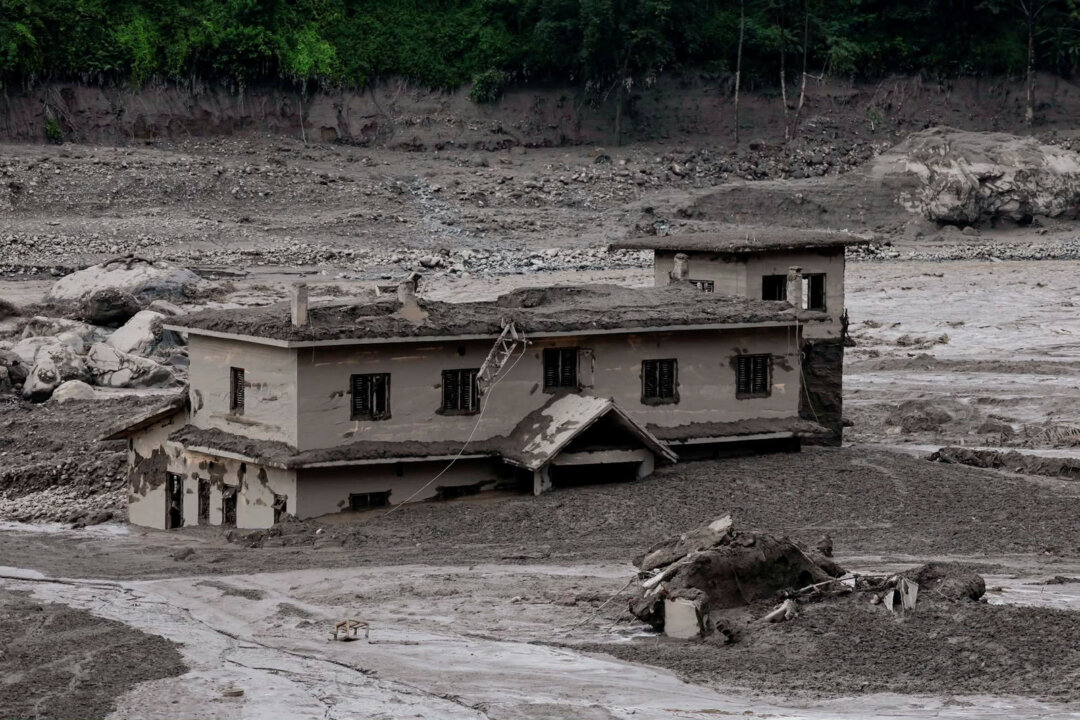
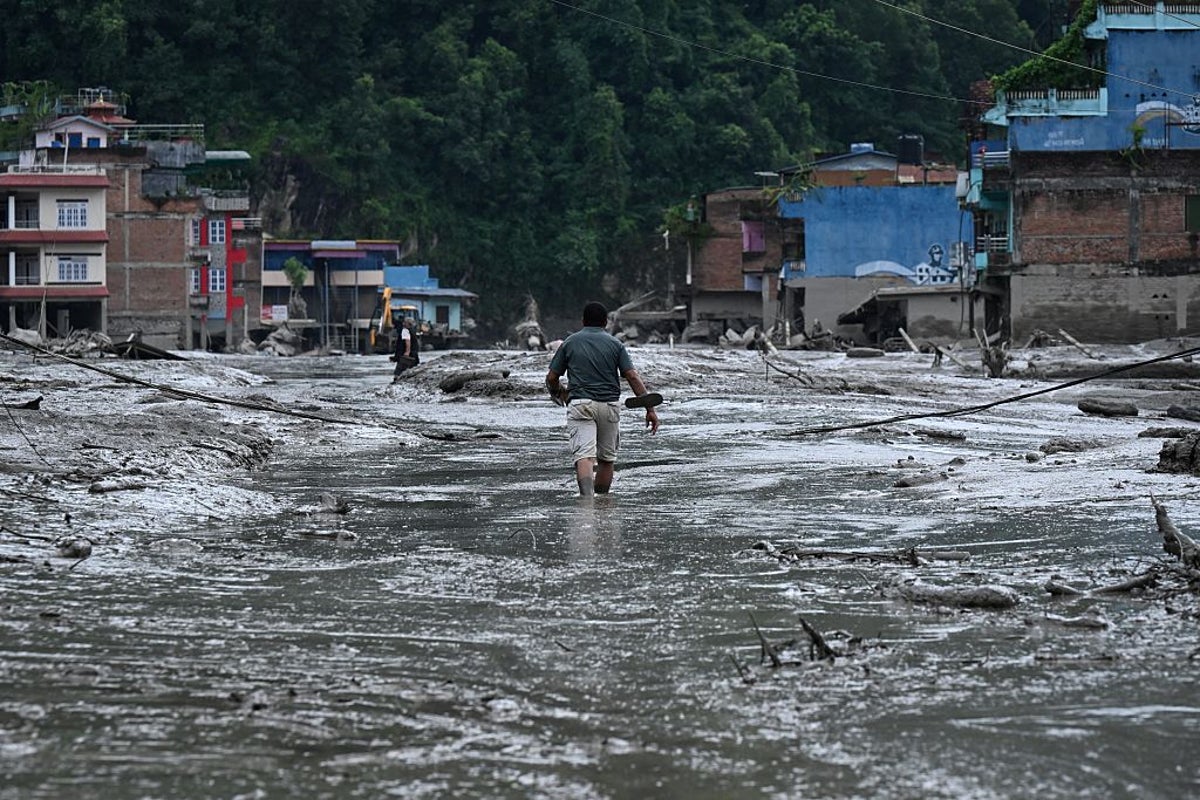
A massive collapse of glacial ice, rock and debris high in the Himalayas generated destructive flash flooding that swept through interconnected river valleys, killing hundreds, leaving many more people missing and damaging villages, towns and infrastructure. The dead include Nepalis as well as tourists visiting from other countries, including dozens of Canadians and Americans.
Read more: Tsunami of dirt: what caused Nepal’s deadly glacial flood?
Yet focusing only on the physical trigger risks missing a larger story. Our research with communities in Nepal and elsewhere has increasingly led us to understand disasters as interconnected ecological, social, cultural, health, economic and governance crises.
We therefore need to ask both what caused this disaster and why hazards become human catastrophes.
Who bears their consequences? And who carries responsibility for reducing the conditions that make communities vulnerable? These questions were central to our recently published study on community-led earthquake preparedness in Kathmandu.
Disasters do not end when the hazard passesMore than a decade after Nepal’s 2015 earthquake, community members described a disaster that, in important ways, had never completely ended. They spoke of prolonged displacement, incomplete reconstruction, disappearing water sources, livelihood insecurity, psychological trauma and inadequate institutional support.
Their experiences challenge conventional ideas of recovery. Rebuilding houses and roads does not necessarily mean a community has recovered. Water, livelihoods, mental health, social relationships, ecological systems and trust in institutions are interconnected. When one system becomes unstable, vulnerability can cascade through others.
Read more: Nepal’s flash floods show the devastating power of ‘cascading hazards’
This is why the present catastrophe is so urgent. We are increasingly facing a polycrisis in which climate pressures, biodiversity decline, water insecurity, infrastructure vulnerabilities, social inequalities and governance failures interact rather than occur independently.
Scientists will need to determine precisely how climate change contributed to this particular event. We should resist automatically labelling every flood or landslide a “climate disaster.” Yet, the wider Himalayan trajectory is deeply concerning. Glacier loss, changing snow conditions, permafrost degradation and shifting river systems all create new possibilities for cascading hazards.
Communities are not waiting to be rescuedOur Nepal earthquake research offers another important lesson: disaster-affected communities should not be seen simply as vulnerable populations waiting for outsiders to save them.
Community members identified their own preparedness priorities: timely information, locally organized training, adequately resourced community disaster teams and stronger roles for women.
Women were understood as caregivers after catastrophe as well as organizers, educators and leaders of future preparedness. This finding echoes work elsewhere. Research on Indigenous, community- and women-led climate solutions shows that communities possess knowledge and governance capacities that conventional disaster systems frequently overlook.
The problem, therefore, is not a lack of community knowledge. Too often, governments, humanitarian organizations and research institutions seek community input without giving communities meaningful authority over how their knowledge shapes preparedness, funding priorities and decision-making.
From participation to shared responsibilityGovernments, humanitarian organizations and researchers frequently design programs and then invite communities to participate. Even well-intentioned calls to include local knowledge can reproduce the same imbalance.
We need to ask: Who determines what knowledge counts? Who defines the problem? Who controls funding? Who makes decisions? Who benefits? And who remains accountable after a project or emergency response ends?
These questions inform what we describe as a responsibility perspective. Our broader research has increasingly moved from knowledge integration toward what we call responsibility integration: recognizing that researchers, governments, universities, NGOs, humanitarian organizations and funding agencies are not neutral observers but participants with obligations to communities, lands, waters and future generations.
Responsibility means building relationships well before disasters rather than arriving only after catastrophe. It means supporting community authority rather than merely consulting community members. It means sustained preparedness rather than short funding cycles. And it means recognizing that the communities contributing the least to climate change often face some of its most severe consequences.
Nepal’s warning is globalNepal’s catastrophe is not Nepal’s warning alone.
Canada, for example, is confronting its own combinations of wildfire, flooding, extreme heat, water insecurity, ecological change and displacement. Our collaborative research with Indigenous communities in Canada shows how land-based knowledge can create pathways for disaster adaptation, while community-led and relational approaches to water governance demonstrate why resilience also depends on community authority, relationships and locally grounded knowledge.
Our research in Canada similarly shows the importance of land-based knowledge, community governance, relational accountability and locally led adaptation.
We certainly need stronger early-warning systems, scientific monitoring, resilient infrastructure and well-resourced public institutions. But technology alone cannot create resilience.
Resilience also depends on relationships, ecological knowledge, community authority, trust and institutions willing to remain accountable long after media attention disappears.
What responsibilities do governments, researchers, humanitarian organizations, corporations and all of us carry for transforming the conditions that repeatedly turn hazards into human tragedies?
Ranjan Datta receives funding from the Canada Research Chair.
Jebunnessa Chapola does not work for, consult, own shares in or receive funding from any company or organisation that would benefit from this article, and has disclosed no relevant affiliations beyond their academic appointment.

 (1).jpg)
 (1).jpg)
 (1).jpg)
 (1).jpg)